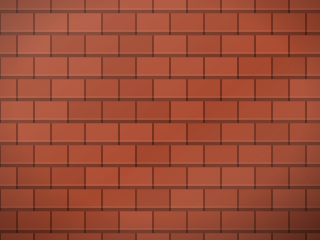
Clay plain tiles (machine-made)
Small, flat clay tiles laid in overlapping courses. The classic English roof.
- 35°+
- 60–100+ years
- £££ Higher
Tiles, slates and flat roofs
Every common roof covering in one place. Search and filter by material, colour and roof pitch, open any tile for the full details, then ask us to quote with the one you like.
Showing all 40 roof coverings
Small, flat clay tiles laid in overlapping courses. The classic English roof.

Plain tiles with an uneven, hand-formed character for heritage roofs.
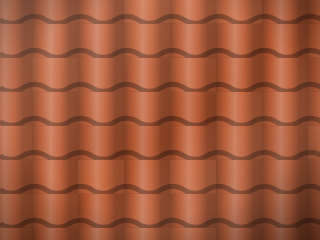
S-shaped clay tiles: the red (and black-glazed) roofs of the Yorkshire coast.
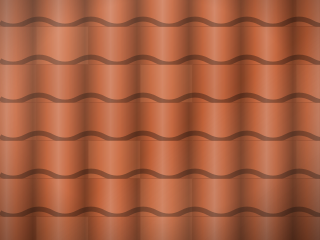
The pantile look with interlocking edges for lower pitches and faster laying.
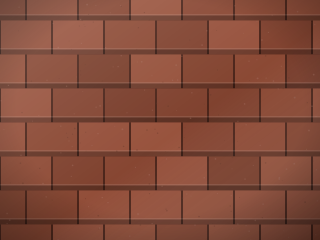
Large, flat clay tiles with crisp lines for a clean modern roof.
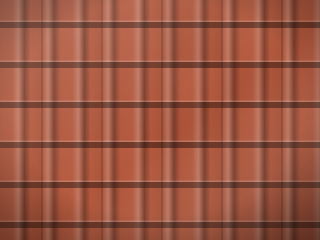
Two rolls and a wide pan in fired clay, on fairly low pitches.
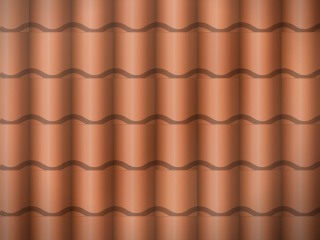
Deep, rounded Mediterranean tiles with a strong shadow line.
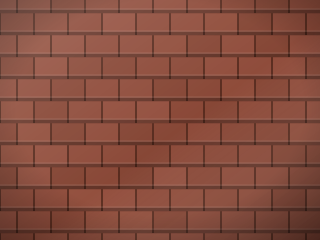
The plain-tile look at a lower cost.

Large interlocking tiles with two rolls. One of Britain’s most common roofs.
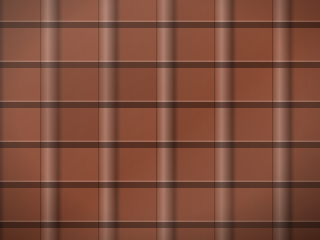
A single generous roll for a chunkier, pantile-like look.
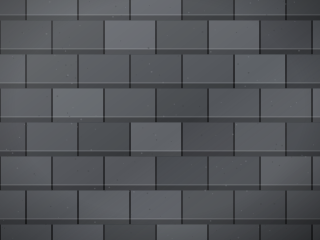
Flat, slate-effect concrete tiles. Neat, modern and economical.
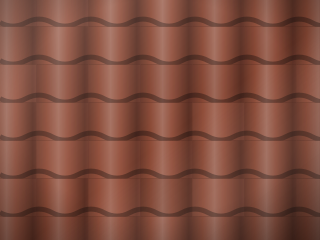
The pantile wave in concrete, quick to lay and very good value.

Thin-edged interlocking tiles that look like slate from the ground.

Specially shaped interlocking tiles for very shallow roofs.

Blue-grey or heather slate from North Wales. The benchmark for quality.

Blue-black natural slate. The most widely used slate in the UK today.

Smooth, dark grey-black slate at a keen price.

Light, uniform man-made slates for a neat look at a sensible price.
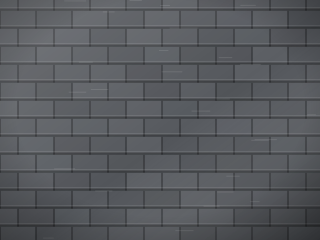
Tough, light slates moulded from recycled materials.
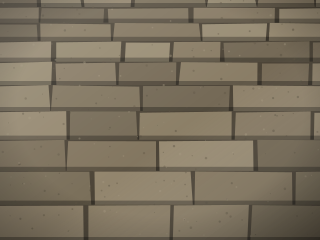
Heavy sandstone slates in diminishing courses. True Pennine heritage.
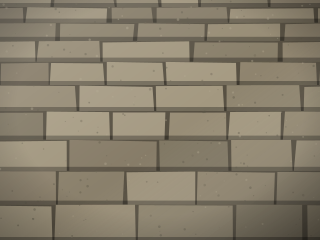
The stone-roof look in moulded, lighter units.
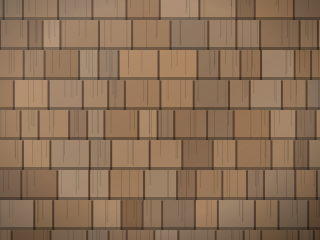
Natural timber tiles that weather to a soft silver-grey.
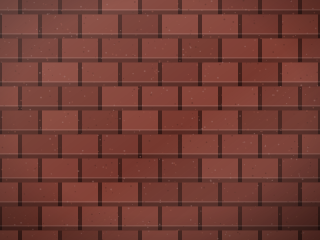
Light, flexible strip shingles for sheds, cabins and small roofs.

Pressed steel panels shaped like tiles, very light and strong.

Crisp metal sheets joined by raised seams, for very low pitches.
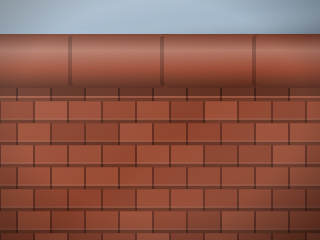
Rounded tiles that cap the top of the roof.
Crisp, angled ridge tiles for a sharper roofline.

Curved hip tiles that follow plain-tile courses round the corner.

Mechanically fixed ridges and verges: no mortar to crack and fall out.
A shallow curved ridge, softer than half round.
Rounded tiles that cap the sloping hips of a roof.
Tiles and troughs that carry water where two slopes meet.
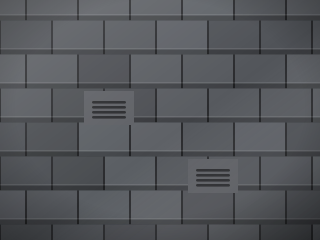
Tiles with hidden vents that let a roof breathe.

A seamless, hard-wearing flat roof that can be walked on.

A single sheet of synthetic rubber: flexible and very long-lasting.

Layered bitumen felt with a mineral finish. Tried, tested and cost-effective.

Brushed-on waterproofing that seals awkward details perfectly.

Light, welded sheets for large and modern flat roofs.

Hot-laid, seamless and extremely hard-wearing.

Hand-dressed lead for flashings, bays, dormers and turrets.
No tiles match all of those. Try removing a filter, or ask us: we work with plenty of tiles not listed here.
Figures are typical guides. The exact minimum pitch, weight and lifespan depend on the manufacturer, your roof’s exposure and how it’s fixed. We’ll confirm what suits your roof at a free inspection. Pictures are illustrations.
Clay · Plain tile
Small rectangular clay tiles with a slight curve, hung on battens with a double overlap so every point of the roof has at least two layers. Machine-made versions give a neat, even finish and weather beautifully over the decades.
Where you'll see it: Victorian and Edwardian houses, and good-quality new builds.
Clay · Plain tile
Each tile is pressed and fired by hand, so no two are quite alike: slightly irregular shapes, edges and colours give a softer, more textured roof. Often required on listed buildings and in conservation areas.
Where you'll see it: Cottages, listed homes and restored period properties.
Clay · Pantile
A single S-shaped wave that overlaps the tile beside it. Red clay pantiles, and the black-glazed versions, are a familiar sight on older houses along the Yorkshire coast and in North Yorkshire villages. Traditional pantiles are laid with mortar or clips; modern versions often interlock.
Where you'll see it: Fishermen’s cottages, farmhouses and terraces across North Yorkshire.
Clay · Interlocking pantile
A modern clay pantile with interlocking side and head locks, so each tile keeps water out on its own. You get the look of a traditional pantile roof on lower pitches, laid quickly and fixed securely.
Where you'll see it: Re-roofs of older pantile houses and new homes in rural areas.
Clay · Flat interlocking
A large-format flat clay tile that interlocks at the sides and head, giving a smooth, contemporary roof with the colour stability of fired clay. Popular on modern extensions and new builds.
Where you'll see it: Contemporary new builds and extensions.
Clay · Double Roman
The classic Double Roman profile, two slim rolls with a broad flat pan between, made in clay rather than concrete. It keeps its colour for decades and interlocks, so it can go on lower pitches than most clay tiles.
Where you'll see it: Cottages, bungalows and houses across the south and west, and some Yorkshire re-roofs.
Clay · Spanish / barrel
Half-round barrel tiles, or one-piece S-shaped Spanish tiles that copy the same look, in terracotta clay. They give a warm, sunny Mediterranean roof and are mostly used on feature buildings, extensions and outbuildings rather than terraces.
Where you'll see it: Villas, garden rooms, porches and some coastal homes.
Concrete · Plain tile
Made to the same small format as clay plain tiles and laid the same way, concrete plain tiles give the traditional look for less. The colour is applied to the surface, so they mellow over time.
Where you'll see it: Post-war and modern houses with a traditional style.
Concrete · Double Roman
A large concrete interlocking tile with two rounded rolls and a flat pan between. Quick to lay and good value, it covers a huge number of post-war and modern homes and works on fairly low pitches.
Where you'll see it: Bungalows, semis and estate houses built from the 1950s onwards.
Concrete · Bold roll
A large interlocking concrete tile with one bold, rounded roll and a wide pan, giving a deep shadow line similar to a pantile. Economical, robust and suited to lower pitches.
Where you'll see it: Modern estates and rural new builds.
Concrete · Flat interlocking
A large flat concrete tile that interlocks, giving a smooth, slate-like roof at a fraction of the cost of real slate. Thin-edged versions have a crisper, more slate-like edge.
Where you'll see it: Re-roofs of bungalows and semis, and new builds.
Concrete · Interlocking pantile
A large concrete tile with a single wave, like a clay pantile, and interlocking edges. It’s one of the most common tiles on 1960s to 1990s homes in the north, and it suits low pitches.
Where you'll see it: Post-war estates, bungalows and garages across Yorkshire.
Concrete · Flat interlocking
An interlocking concrete tile with a thin leading edge and a smooth or riven face, so a finished roof reads like slate. You get the slate look at a lower cost, laid much faster and on lower pitches.
Where you'll see it: Modern estates and re-roofs where slate was too costly.
Concrete · Low-pitch interlocking
Interlocking concrete tiles with deep channels and extra-tight locks, designed for roofs too shallow for ordinary tiles. They let porches, extensions and dormers have a tiled finish instead of a flat roof covering.
Where you'll see it: Single-storey extensions, lean-tos and porch roofs.
Natural slate · Slate
Split from quarries in North Wales, Welsh slate is famously hard-wearing, with a fine grain and subtle blue-grey or heather-purple tones. It’s the original slate on countless Victorian terraces and lasts well over a century.
Where you'll see it: Victorian and Edwardian terraces across the north of England.
Natural slate · Slate
Natural slate from Spain gives the real-slate look at a lower price than Welsh. Quality varies between quarries, so we use graded, tested slate from reputable sources for a long, trouble-free life.
Where you'll see it: Re-slated terraces and new homes.
Natural slate · Slate
A natural slate from Brazil with a very smooth, even face and a deep grey to black colour. It costs less than Welsh or the best Spanish slate, and quality varies between quarries, so it pays to choose a tested, graded product.
Where you'll see it: Newer homes and extensions wanting a crisp slate finish.
Man-made slate · Slate
Thin, flat slates made from cement reinforced with fibres. They’re perfectly uniform, very light and quick to fix, giving a tidy slate-style roof for considerably less than natural slate.
Where you'll see it: Extensions, dormers and new builds.
Man-made slate · Slate
Moulded from recycled plastics and minerals with a natural-looking textured face. They’re light, flexible and hard to break, which makes them practical for exposed roofs and awkward access.
Where you'll see it: Re-roofs where weight or breakage is a concern.
Stone · Stone slate
Thick slabs of split sandstone laid in courses that get smaller towards the ridge. Yorkshire stone roofs are part of the county’s character, especially in the Dales and Pennine towns, and are often protected in conservation areas.
Where you'll see it: Farmhouses, mills and stone cottages in the Dales and West Yorkshire.
Stone · Stone slate
Made by casting crushed stone and cement in moulds taken from real stone slates, laid in diminishing courses. A more affordable and lighter way to get a stone-roof appearance on new work.
Where you'll see it: New homes and extensions in stone-built villages.
Timber & shingles · Shingle
Thin tapered tiles of Western red cedar, sawn (shingles) or split (shakes). They start honey-brown and silver over a few years. Light and natural, they suit garden buildings, extensions and contemporary homes.
Where you'll see it: Garden offices, lodges, eco homes and some period cottages.
Timber & shingles · Shingle
Strips of bitumen-coated glass fibre with a coloured mineral finish, cut to look like rows of tiles. They’re nailed to a boarded deck and bonded together, which makes them light, quick and good on curves and small roofs.
Where you'll see it: Garden buildings, playhouses and timber-framed outbuildings.
Metal · Tile-effect sheet
Galvanised steel sheets pressed into a tile profile and finished with a bonded stone-chip coating, so from the ground they look like a tiled roof. Each panel covers several tiles’ worth, at a fraction of the weight.
Where you'll see it: Lightweight re-roofs, extensions, mobile and park homes.
Metal · Standing seam
Long trays of zinc joined by folded upstands (standing seams), giving clean vertical lines. Zinc forms its own protective patina, needs almost no upkeep and works from very shallow pitches up to walls.
Where you'll see it: Modern extensions, dormers and architect-designed homes.
Ridges & fittings · Ridge
Curved ridge tiles that sit along the ridge where the two roof slopes meet. They can be bedded in mortar or, better on exposed roofs, fixed mechanically with a dry ridge system.
Where you'll see it: The ridge of most pitched roofs.
Ridges & fittings · Ridge
Ridge tiles with a straight, angled profile. They give a sharper finish than half-round ridges and suit slate and flat-tiled roofs especially well.
Where you'll see it: Slate roofs and modern flat-tile roofs.
Ridges & fittings · Hip
Shaped like a bonnet, these clay tiles course in with plain tiles up the hip of the roof, giving a soft, traditional corner instead of a ridge-style capping.
Where you'll see it: Hipped plain-tile roofs on period homes.
Ridges & fittings · Ridge & verge system
Instead of bedding ridges and verges in mortar, these systems clip and screw them in place with weatherproof seals. Nothing to crack or wash out, which makes them ideal for windy, exposed and coastal roofs.
Where you'll see it: Re-roofs and repairs, especially near the coast.
Ridges & fittings · Ridge
A ridge tile with a low, curved top that sits neatly over most profiles. It’s the everyday ridge on many concrete-tiled roofs and can be bedded in mortar or fixed with a dry ridge system.
Where you'll see it: The ridges of most estate houses and bungalows.
Ridges & fittings · Hip
Rounded cover tiles laid down the hips, the sloping edges where two roof slopes meet. They’re bedded or dry fixed, with a hip iron at the bottom to stop them sliding.
Where you'll see it: Hipped bungalows, semis and detached houses.
Ridges & fittings · Valley
Valleys carry more water than any other part of a roof. Purpose-made valley tiles curve round the internal corner on plain-tiled roofs, while GRP or lead-lined valley troughs suit interlocking tiles and slates.
Where you'll see it: Wherever two roof slopes meet in an internal corner.
Ridges & fittings · Vent
Vent tiles look like the tiles around them but have a hidden opening to let moist air out of the loft. Good ventilation prevents condensation, mould and rotting timbers, and is often needed when a roof is re-covered.
Where you'll see it: Most re-roofed and converted lofts.
Flat roofing · Flat roof system
Glass-reinforced plastic laid as one continuous layer and finished with a tough topcoat. Seamless, rigid and neat, with moulded trims at the edges. Great for roofs that get foot traffic, like balconies.
Where you'll see it: Extensions, garages, dormers and bay roofs.
Flat roofing · Flat roof system
A tough synthetic rubber membrane, usually laid in one piece on smaller roofs. It stays flexible in heat and frost, copes with movement and has a long track record on flat roofs.
Where you'll see it: Garages, extensions and outbuildings.
Flat roofing · Flat roof system
Modern reinforced bitumen membranes are torched on in layers, finished with a mineral cap sheet that protects against UV. Far better than the old felt roofs, and a cost-effective choice.
Where you'll see it: Garages, extensions and commercial flat roofs.
Flat roofing · Flat roof system
A liquid membrane applied by brush or roller that cures into a seamless rubber skin. It wraps around pipes, upstands and awkward shapes where sheets are fiddly, and can renew some existing roofs.
Where you'll see it: Dormers, bays, gutters and small flat roofs.
Flat roofing · Flat roof system
A single layer of tough PVC or TPO sheet, with the joins welded with hot air into one continuous skin. It’s light, quick to lay over large areas, and comes in light colours that keep the building cooler.
Where you'll see it: Schools, offices, flats and modern extensions.
Flat roofing · Flat roof system
Asphalt heated and spread by hand in layers to form a seamless, solid surface. It’s heavy and very durable, and it takes foot traffic, so it’s used on balconies, walkways and older flat roofs.
Where you'll see it: Older flats, balconies, walkways and commercial roofs.
Lead · Sheet
Milled lead sheet in different thicknesses (codes), cut and dressed by hand to seal junctions and cover small roofs. Properly fitted leadwork is one of the longest-lasting parts of any roof.
Where you'll see it: Chimneys, bays, dormers and valleys on most period homes.
Choosing the right roof
Every tile has a minimum angle it can keep the rain out at. Low-pitched roofs need interlocking tiles or slate; plain tiles need a steep roof.
Switching from slate to concrete tiles, or to stone, can add a lot of weight. We check the roof structure before recommending a heavier covering.
Listed buildings and conservation areas often have rules about materials. Exposed and coastal roofs need extra fixing. We’ll guide you through it.
Tell us which one and we'll come and look at your roof for free, check it suits, and give you a fixed, written quote. No deposit, ever.